The reasons behind the latest clash within the Democratic Center that left it without a polling firm to choose the presidential candidate for Uribismo.
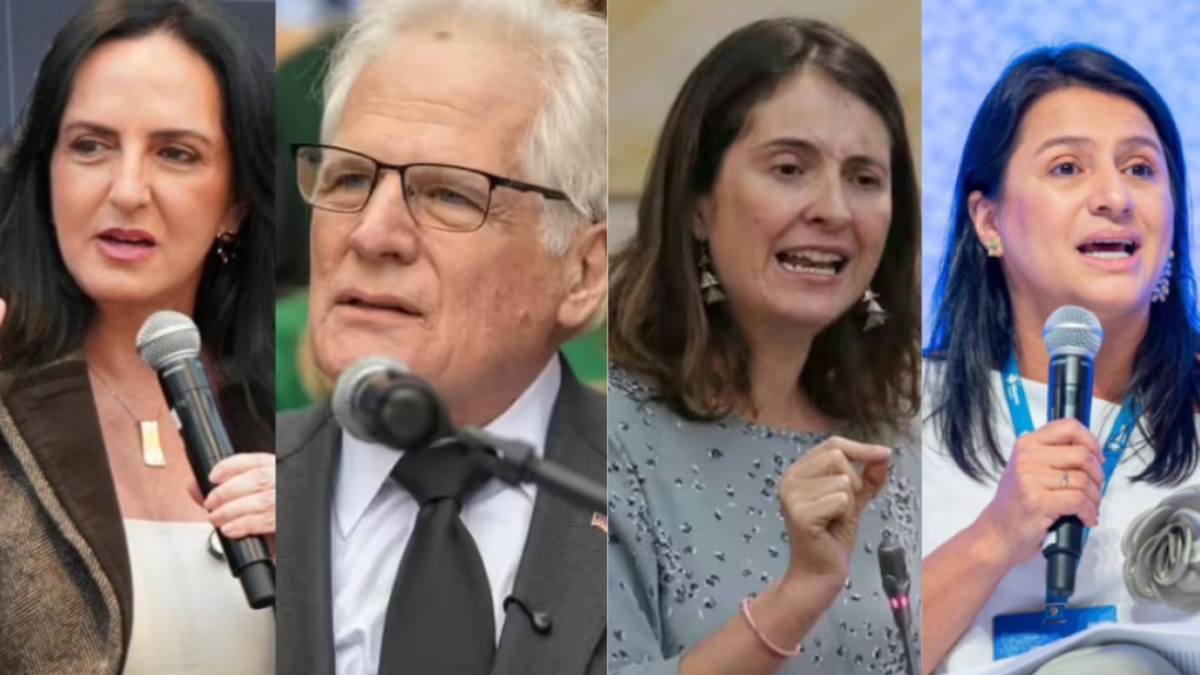
As of today, the Democratic Center party doesn't know how it will choose its presidential candidate or candidates for the upcoming primary. While former President Álvaro Uribe is working hard to forge a coalition of traditional parties to challenge Petro's movement and his Broad Front, internal tensions within his party have led to the collapse of previously agreed-upon processes.
This Monday it was confirmed that AtlasIntel, the international polling firm they had already chosen to select the candidate, withdrew amid controversy over doubts raised by Miguel Uribe Londoño's supporters against the company, which led to a major internal dispute.
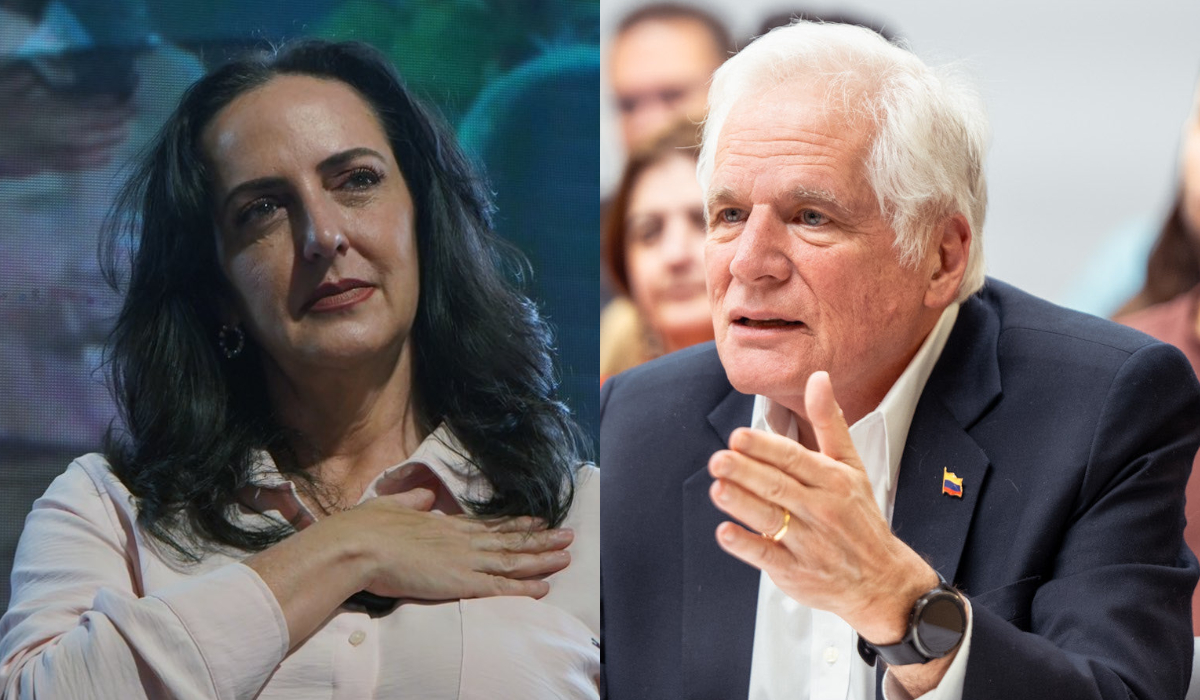
Presidential pre-candidates for the Democratic Center party, María Fernanda Cabal and Miguel Uribe Londoño. Photo: Archive
"Following a request for information from one of our main media partners in Latin America, we have been informed that conducting a survey for the Democratic Center could generate a reputational risk regarding our impartiality, particularly with respect to the public surveys that AtlasIntel will publish in the upcoming presidential contest," the Brazilian polling firm stated.
They added: “After consulting with this media partner, I have decided not to proceed with further discussions regarding a possible poll commissioned by the Democratic Center to AtlasIntel.” Thus, the Democratic Center was left without its main polling firm to carry out the selection process for its candidate or candidates.
This is a significant issue, because they had hoped to proceed with a series of polls toward the end of November to determine which of the five candidates was most favored as the Democratic Center's nominee. By selecting AtlasIntel, they were simply hoping to find a second polling firm to verify the data produced by the Brazilian company.
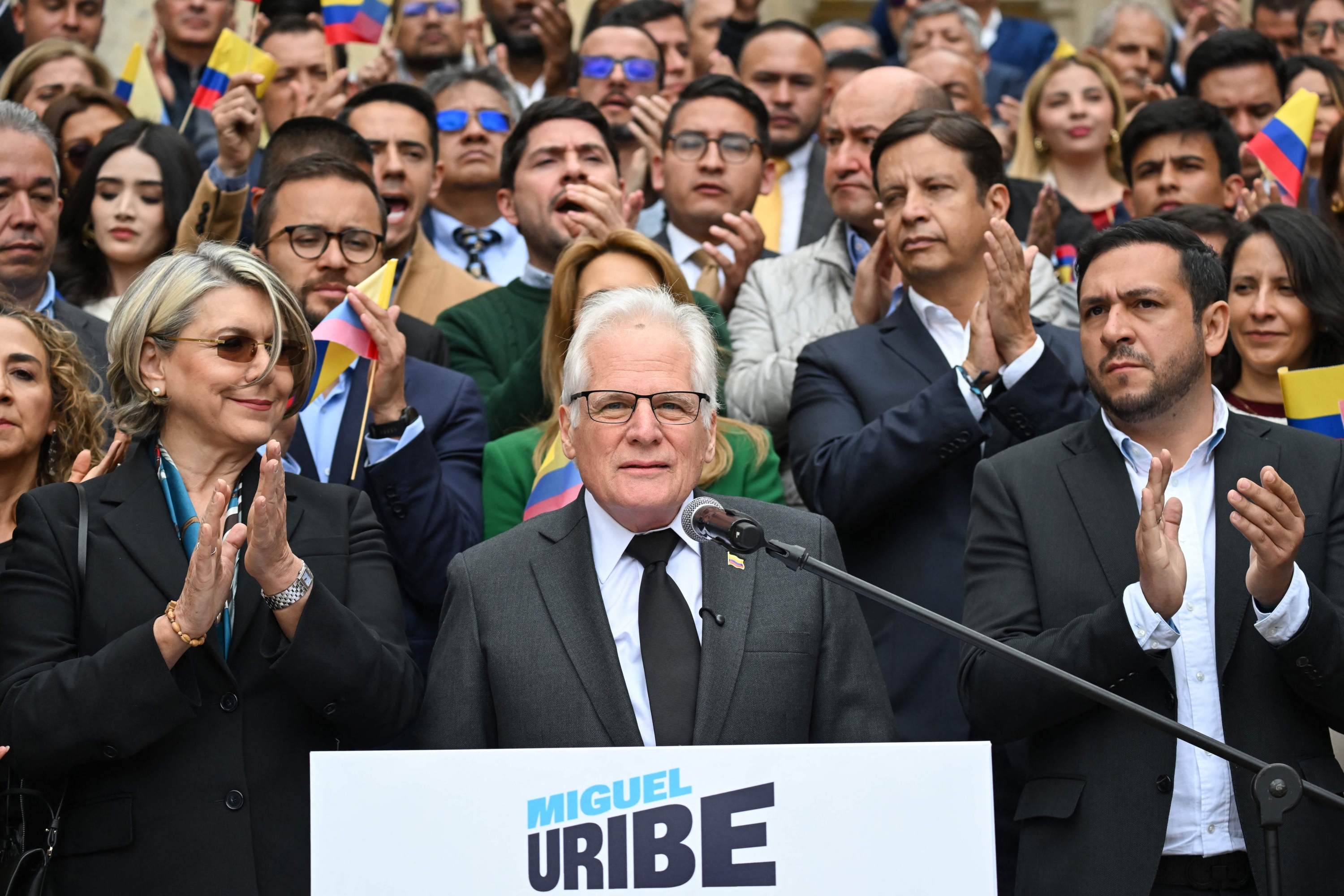
Miguel Uribe Londoño at the launch of his presidential pre-candidacy. Photo: AFP
However, they now face the worst-case scenario, as the main polling firm withdrew, forcing them to find a new company to take on the task. This is particularly challenging given that any polling firm will likely think twice about participating in a process already fraught with controversy. Time is running out for the right-wing party, as they had hoped to complete the selection before December 8th, the deadline for congressional candidate registration. They planned to determine which of those not selected in the poll would be included on the congressional lists.
On the other hand, in addition to the difficulties in conducting the polls, there are also new internal tensions caused by Miguel Uribe Londoño's stance. While he expressed his doubts to AtlasIntel and made harsh comments against the party director, Gabriel Vallejo, the other four pre-candidates came out in his support. "He's going to do a lot of damage to the party," said one pre-candidate consulted by this newspaper about the latest dispute.
The origin of the tensions The controversy began a week ago, although it only came to light on Friday. According to various sources within the Democratic Center party, Miguel Uribe Londoño met with party leaders to inform them of his veto of the polling firm AtlasIntel and his disagreement with the initially chosen methodology. In his view, three national polling firms should be selected to conduct the surveys.
He then reiterated his reservations, this time in a letter that was later made public. Gabriel Vallejo responded, and his reply was also disseminated by the media.
In that second communication, a harsh tone was noted from the director of the Democratic Center, due to annoyance with the comments made by the pre-candidate, "his language and terms are not in keeping with the treatment that the party and I have had with you," and because of versions that reached the party that supposedly close to Miguel Uribe Londoño tried to hire AtlasIntel, which would imply a conflict of interest, and given the refusal they decided to veto it.
Vallejo specifically questioned Uribe Londoño's campaign about these claims. "After October 17, 2025, did any of your campaign advisors contact AtlasIntel and propose, at any point in the conversation, either hiring them or requesting their services to conduct a study or research to measure voting intentions in Colombia for the 2026 presidential elections?"
Most of the Democratic Center's pre-candidates came out in support of Vallejo and echoed the questions surrounding alleged underhanded dealings with the Brazilian polling firm. "I've always told you, you have the ideal qualities and the right people to lead and carry this process forward," said Senator and pre-candidate Andrés Guerra, showing his support for Vallejo.
He added: “I truly cannot understand how someone who believes he can do anything with money can now turn the process into an unethical scenario, and furthermore, claim ignorance of the actions and conduct of his skilled advisors, when one of his tactics is to control everything, as evidenced by his contact with the international polling firm a month ago. What was their intention? What were they looking for? What was their strategy?”
Then, Guerra concluded, making clear reference to the accusations against Uribe Londoño's campaign: "It is worrying that, having failed to win her over, they proceed to veto her, but what is most serious is that they are destroying our process internally, arguing with skill and cunning that attacking is the best defense."
María Fernanda Cabal and other pre-candidates also came out in support of Vallejo and the mechanism that had been chosen several months ago. “I would like to resume with Atlas, or if there is another international option, we cannot allow the veto power that is trying to derail this stage, which has been in the works for a year,” said the senator, who even suggested that there were other interests at play in this new controversy: “I feel that there are external forces trying to implode the party.”
Some sources, who requested anonymity, asserted that Miguel Uribe Londoño's move was intended to benefit other candidates outside the party, specifically Juan Carlos Pinzón. They recalled that Pinzón was initially proposed by the family of the assassinated Miguel Uribe Turbay to replace him in the election, but his candidacy was rejected due to his lack of involvement within the party.
Faced with the new clash within the Uribe camp, Miguel Uribe Londoño spoke out on several occasions. Initially, he rejected the insinuations that he had contacted the Brazilian polling firm irregularly.
“Still surprised and saddened, I proceed to respond to some of the points made last night by you and some of the pre-candidates of our party in the meeting we held about a conversation that my advisors had with the polling company Atlas Intel and for which I was labeled, among other things, as an unethical person,” he said in the letter of discord.
Later, in another statement, he said he would submit to whatever they decided: “I am willing to submit to any polling process my party decides. The honor and transparency of President Álvaro Uribe Vélez give me complete confidence,” he said.
Uribe Londoño emphasized that he will not foster internal divisions and that his goal is "to unite first the Democratic Center, then the opposition, and finally the entire country." He also affirmed that he will abide by the mechanism the party defines for choosing its presidential candidate.

What will happen to Juliana Guerrero? Photo:
JUAN SEBASTIAN LOMBO DELGADO

eltiempo