'Cutting emissions today is for generations to come.'

The outlook for climate change is bleak, but there are people who manage to remain optimistic. Ramanathan Veerabhadran is one of those people: he believes things are bad, that they will get worse in the coming years, but that before long, people will finally realize the seriousness of the matter and act accordingly.
Veerabhadran, who prefers to be called Ram, is an Indian-born climatologist with vast experience and a professor emeritus at the prestigious Scripps Institution of Oceanography at the University of California, San Diego. He was one of the scientists who, in the 1970s, studied the existence of gases other than carbon dioxide that trapped heat in the atmosphere and influenced climate change. His prestige led him to be one of the scientists who collaborated with Pope Francis on the encyclical on the environment, published in 2015 (Ram was already a member of the Vatican Academy of Sciences at the time).
Although he has never visited Argentina, Ram (80) built a relationship with the country through Francis, and in September he participated in the inaugural conference of the diploma in climate litigation in Latin America and the Caribbean , organized by the Fray Bartolomé de las Casas Legal Research Institute (created precisely by Pope Francis in 2023).
In this interview, he points out that the poorest are those who suffer the most from the consequences of climate change and that legal actions in defense of climate change strengthen their hope.
How do you see the current situation? How bad are we? The situation right now is bad. In the sense that we're not reducing greenhouse gas emissions, we're not managing to bend that famous upward curve. I'm not saying anyone is reducing it; some are, in fact. The United States is, but not in the necessary amount or speed. That's the first bad news. The second is that climate change is already here: the extreme events, such as floods, landslides, or fires we see today, are what we expected for 2030, 2040, in fifteen or twenty years. The impacts are accelerating.
Do you think there is enough political will to generate this social transformation? Look, it's interesting. We had a meeting two years ago with Francisco, with mayors and governors, and we concluded that the main fight against climate change must take place at the local level, in municipalities or departments. National support is needed, of course, but the important thing is that the movement comes from the bottom up. Then we had another one this February in California and Boston; two weeks ago, one in Nairobi (Kenya); and at the end of the year there's another one in Brazil. Everywhere we found enormous support from governors and mayors because they see it, they suffer it, and they are the ones who have to fight.
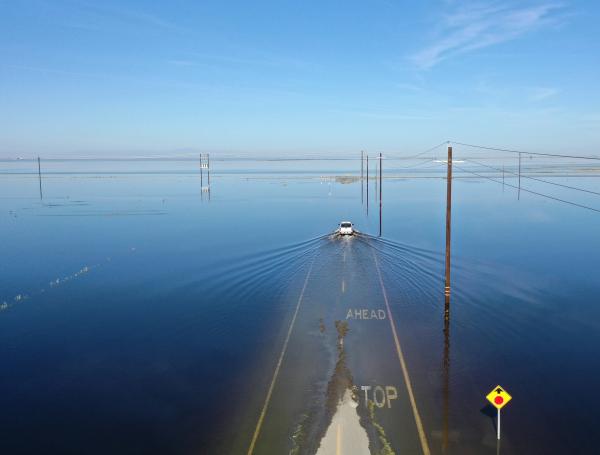
Floods and extreme rainfall will increasingly affect different parts of the world. Photo: Getty Images
Yes, yes, I agree. What's needed is a huge amount of financing; the damage is in the trillions of dollars. At the national level, we can only ask for more taxes; that's what we can ask of companies, that intergenerational responsibility. Cutting emissions today is for generations to come, in thirty or forty years. And adaptation is for now, which makes everything more complicated and difficult to establish priorities. I'm equally optimistic, but we need to educate people; that's paramount for me.
December marks the tenth anniversary of the Paris Agreement, where nations agreed on certain goals and actions to combat climate change. How do you view the process? Has progress been made this decade? Was it worth it? We are all disillusioned with the UNFCCC (the United Nations Framework Convention on Climate Change) and the IPCC (the Intergovernmental Panel on Climate Change, also part of the UN).
It's thought that the poor are the ones who pollute. No. It's us, the rich, who pollute the planet. Those billion people contribute 60% of the pollution, and the poorest three billion on the entire planet contribute only less than 5%.
Because progress is slow, they meet every year, produce documents, but no one reads them. Nations can sign them, but then they don't implement them. At the same time, we can't abandon the mechanism and say goodbye to the UNFCCC, because they keep the issue alive. National leaders (shakes head), you know, the United States doesn't support the multilateral mechanism today , and I know that the United States is key to making it work.
The global nature of the cause is being lost, and that's a problem, as is the lack of global leaders. That's why, from the Vatican, what we're seeking is a movement from the bottom up: mayors, governors, the public, young people. We need a different way of approaching the issue. We can sit back and complain, but that doesn't change anything. We have to act, and I think each person should individually push for action.
It's also been ten years since Pope Francis' encyclical Laudato si', in which he addressed the environmental situation, including climate change. How do you think it influenced this idea of changing mentality? First, I must say that I'm not Catholic. I'm not even Christian. As someone born in India, my religion is Hinduism, but I'm not a good Hindu either because I don't practice. I must tell you that I consider Pope Francis a true global spiritual leader, not just for Catholics. I consider Laudato si' the first document that speaks to us about the human dimensions of climate change. We scientists talk about one aspect or another very precisely, about the ecosystem, but we don't connect the dots with human suffering. He did.
The year before the encyclical (2014), we had a meeting on human and planetary sustainability. At the end of the meeting, I had to give him a summary. We were supposed to have an hour with him, but that very day, Time magazine had chosen him as its personality of the year; therefore, the Vatican was filled with cameras and journalists. The Pope only gave me two minutes, so I simply told him that most of the polluting gases came from the richest billion people on the planet.
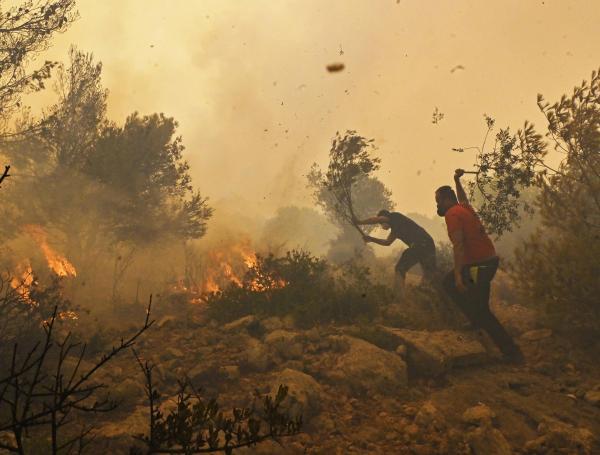
Global temperatures are rising faster than previously projected. Photo: Getty Images
It's often thought that it's the poor who pollute. No. It's us, the rich, who pollute the planet. Those billion people contribute 60% of the pollution, and the poorest three billion people on the planet contribute less than 5% . In other words, nothing. But they bear 75% of the suffering of climate change. The Pope beautifully captured in Laudato si' that the Earth's complaint must be heard as the complaint of the poor. That's how he connected those facts, that's how he promoted the issue of equity and intergenerational solidarity.
Is Leo XIV following the same path as Francis? I think... I started praying that León would be like Francis on the climate issue. I see he's made very positive statements throughout his papacy, and he also made them when he was in Peru. He's very committed to the poor. For me, climate change means putting the spotlight on the poor and vulnerable on the planet, because it's one of the most serious threats to them and completely beyond their control. The statements León made about the poor and vulnerable make me think he's going to speak out against the implications of climate change. We're planning an audience with him this month as part of a meeting on children's education and the indigenous population that will be held at the Vatican.
The main fight against climate change must take place at the local level, in municipalities or departments.
Correct. I constantly emphasize in my talks: if one maintains that it's only a problem for the poor, the fortunate, people like me, can say, "It's not my problem, nothing will happen to my children." That's why I also insist that it's a catastrophe for everyone, not just the poor. We need those who benefit from the system to be there. It's not a question of pointing fingers at them because that might scare them away. We must convince them, find a common language ; that's why we talk about the social transformation that's needed.
There's talk of "tipping points," the thresholds beyond which there's no point of return in the climate system. Which of these are of most concern to you in the coming years? I'm worried, yes. At the Vatican, we discuss low-probability but high-impact events, like a black swan, with the potential to cause a lot of damage. There are also some, like ocean circulation, the rapid melting of glaciers... but I'm more concerned about extreme weather events—like heat waves that harm a large number of people, en masse—and droughts and floods caused by intense rains.
A few weeks ago, it happened in Texas (where more than 100 people died), and it happens often in Latin America. We react, the police and civil defense arrive, but there's no response. That is, we need to know how to protect homes and people from flooding: putting up barriers, fences, and that kind of infrastructure. We have to focus on that response, not just react. That requires long-term thinking.
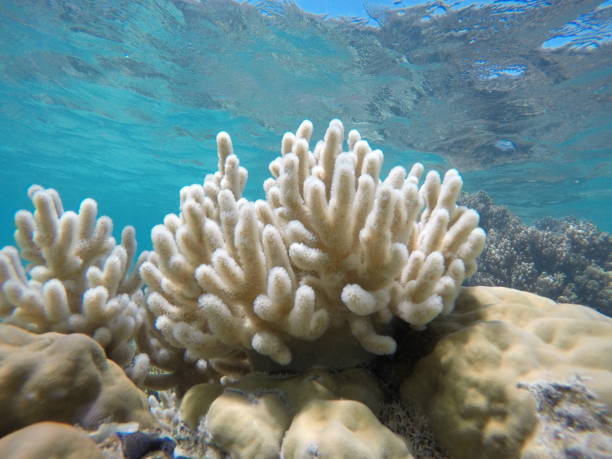
Coral reefs will become extinct if global warming is not reversed. Photo: Getty Images/iStockphoto
That's why I return to something I said before. We mustn't rely on central national power; we must act locally, in cities, mayors, even associate governors, because it can be prevented . In other words, we can't know where the next event will happen, but it will happen somewhere, and we must start acting.
You were also an advisor to the Dalai Lama. What was that experience like, and what differences do you see with the Vatican's Catholic leadership? In 2013, I was at a public meeting with His Holiness the Dalai Lama and I said a few things to him, more or less the same things I'm answering in this interview, and he stopped me and said, "Professor Ramanathan, I want to point something out to you. You're trying to change the external environment, but without changing people's internal environment." That's when I realized the need for social change and working to educate the public. He later invited me to his 80th birthday. I spoke to him again, and he showed me that he was very concerned about climate change, just like Pope Francis. We are lucky to have spiritual leaders of his stature.
In this social cocktail, there is a technological ingredient that is changing our minds, perhaps not in a positive way. I think AI can have a huge impact . We have computationally intensive climate scenarios and forecasts, and it can help us predict extreme events. If we can know, not a year or six months in advance, but a few weeks before they happen, it will help us a lot.
Another avenue for combating climate change is legal action, through the Inter-American Court of Human Rights, various national supreme courts, and even lower courts that have issued strong rulings. Do you think this is a valid and reasonable option? It's a very promising and excellent development. It would have to be assessed on a case-by-case basis, but I certainly support the poor, who suffer the most from the impacts of climate change, joining forces with South American or other lawyers to pursue legal action and achieve success.
In short, he is optimistic about the future of civilization. Tremendously. Simply because people may not be educated about the details, but nature speaks. By 2030, with a sustained rise in temperature, the effects will be felt everywhere. At that point, people will unite to fight, and leaders will surely have more courage and stop being afraid . I don't blame them because fighting is very expensive, and it requires a lot of taxes, which, if imposed without a clear reason, will make them no longer leaders. So, people need to be informed about the purpose. There may be more pain in five years, but everything will get better.
For the Nation (Argentina) - GDA

eltiempo