
What has the world achieved since the Paris Climate Agreement?
When the gavel fell, sealing the Paris Agreement in 2015, tears flowed, heads of government shook hands, and the participants of the UN climate summit COP21 broke into a standing ovation.
It was a pivotal moment in climate policy. For the first time, almost 200 nations adopted a legally binding agreement to limit global warming to well below 2 degrees Celsius, and ideally to keep it below 1.5 degrees Celsius.
Scientists had identified the 1.5-degree limit as a critical defense line against the most severe, irreversible damage caused by climate change . The UN has now declared that exceeding this limit is "inevitable" and will have "devastating consequences" for the world.
Despite some notable progress in climate action since Paris, experts warn that the world has reached a critical juncture. As countries continue to burn oil, gas, and coal, temperatures are rising, causing or exacerbating life-threatening storms , floods , and heat waves .
The past decade was the warmest since records began, and 2024 was the hottest year so far.
Temperatures have risen since the Paris Agreement.As world leaders gather in Brazil for this year's COP30 climate summit , scientists warn that every fraction of a degree counts and can mean the difference between safety and suffering for millions of people.
The increasing heat causes approximately one death per minute. Air pollution from burning fossil fuels is estimated to kill 2.5 million people per year.
The heat also has serious consequences for the economy: last year alone it caused approximately $304 billion in economic losses worldwide.
At the same time, critical ecosystems are being strained beyond their limits. This year, the world crossed a so-called "tipping point" of the climate for the first time. The consequences are irreversible changes. For example, the warming of the oceans has triggered a massive coral bleaching event.
Coral reefs are among the most biodiverse ecosystems on Earth, home to a quarter of all marine life. Scientists warn that other tipping points, such as the dieback of the Amazon rainforest and the collapse of vital ocean currents , are dangerously close.
What about the emissions?Scientists believe the current critical situation was caused by the continued burning of fossil fuels since the Paris Agreement. Last year, greenhouse gas emissions reached a record high , now 65 percent higher than in 1990.
To keep the goals of the Paris Agreement within reach, emissions should already have peaked and be declining. However, a recent analysis shows no signs of a slowdown in the increase or even a decrease in emissions.
Instead, emissions increased dramatically last year - with the burning of coal, oil and gas in particular sending a record 53.2 gigatons of CO2 equivalents into the atmosphere.
Two-thirds of these emissions came from just eight economies: China, the USA, the EU, India, Russia, Indonesia, Brazil, and Japan. Of these major polluters, only the EU and Japan reduced their annual emissions compared to 2023.
The vast majority of this comes from the energy sector, which powers our lives and our economy.

Even though climate protection measures are lagging far behind overall, there have been some remarkable advances.
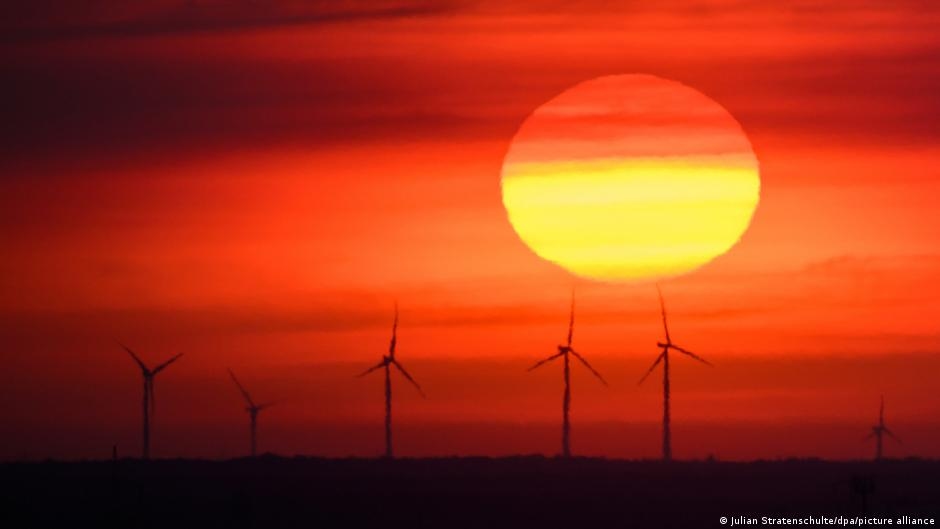
Renewable energies have grown strongly worldwide and have even exceeded optimistic expectations. Falling costs are fueling this boom. At the same time, investments in clean energy are increasing; they are now twice as high as investments in fossil fuels.
The share of renewable energies in the global energy supply has more than tripled since the Paris Agreement. In 2024, the world recorded its largest increase in renewable energy generation, which now supplies 40 percent of global electricity. In the first half of 2025, solar and wind power overtook coal in electricity generation for the first time.
Global solar capacity is now more than four times higher than projected in 2015 and is doubling every three years. Wind power capacity has tripled, according to an analysis by the Energy and Climate Intelligence Unit, a British non-profit organization.

China is a world leader, having installed more solar power last year than the rest of the world combined. In June 2025, China's total solar capacity exceeded one terawatt (TW), ten times more than in 2017 and 1,000 times more than in 2010.
Over the past ten years, the share of electric vehicles in car sales has risen from about one percent to almost 25 percent. This means that the goal of the Paris Agreement, to have at least 100 million electric vehicles on the road by 2030, is likely to be reached earlier than planned.
Renewable energies may be breaking records, but so is coal : the dirtiest fossil fuel reached a record high in global consumption last year. And while more money is flowing into green energy, public funding for fossil fuels has also risen to $1.6 trillion (€1.37 trillion) per year.
Will we achieve the goals of the Paris Agreement?Experts warn that current climate protection measures are still insufficient.
While the progress of the last decade has helped to avert the unchecked warming of 4 degrees Celsius by the end of the century that was projected in 2015, the planet is still on track to warm by 2.6 degrees Celsius by 2100. Even this less drastic scenario would result in 57 additional deadly heat days per year compared to today.

The world needs a massive acceleration of ambition and emissions reductions in all sectors, according to the latest "State of Climate Action Report" .
This includes a much faster phase-out of coal this decade and a ninefold increase in efforts to stop deforestation. It also includes doubling the growth of renewable energies, increasing global climate finance by almost one trillion dollars per year, and rapidly expanding public transport infrastructure in the world's most polluting cities.
The article was translated from English by Anke Rasper.
Editor: Tamsin Walker

dw