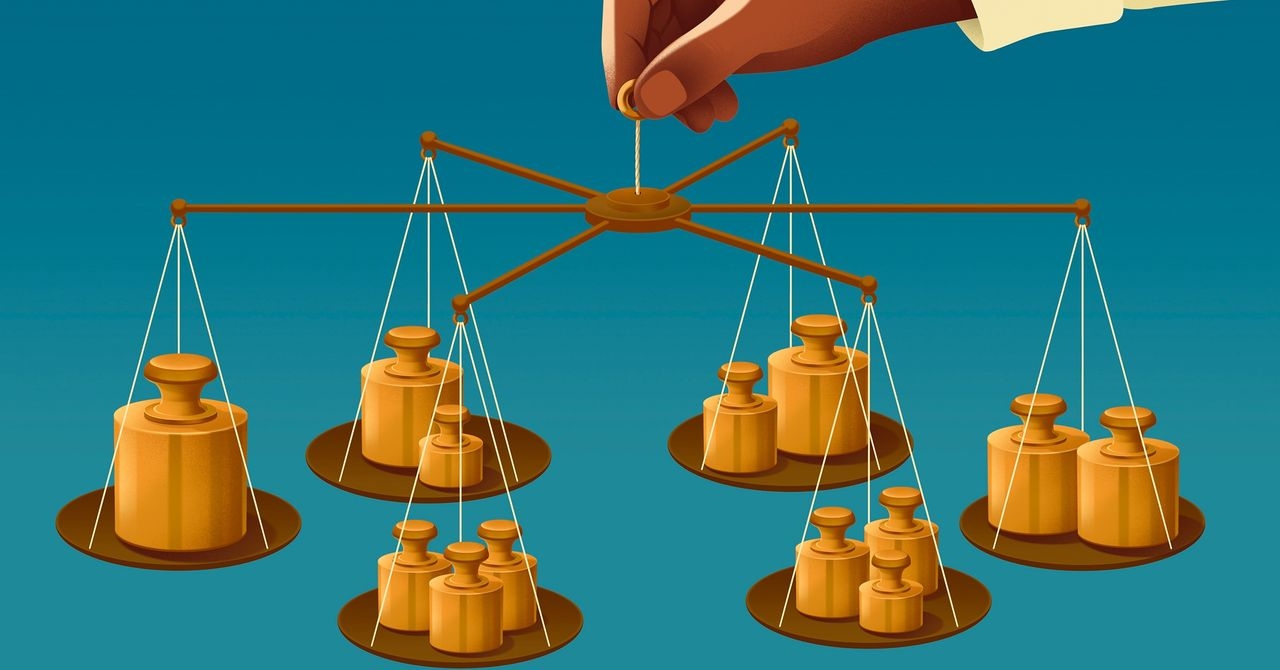
Biological weapons are the only weapons of mass destruction without a control mechanism. Trump wants to change that.

International bodies monitor the process to ensure that no one produces atomic bombs or chemical weapons. But who ensures that pathogens are not used for military purposes?

When US President Donald Trump addressed the UN General Assembly a few weeks ago, he had little regard for international cooperation. He called for cooperation on only one issue: biological weapons. All countries should join the US in its efforts to "end the development of biological weapons once and for all," Trump said. To this end, his administration would launch and lead a new initiative.
NZZ.ch requires JavaScript for essential functions. Your browser or ad blocker is currently preventing this.
Please adjust the settings.
Biological weapons are primarily known to most people from movies, such as the latest James Bond film, "No Time to Die." They are means of spreading infectious, often deadly diseases. Even small quantities of these agents could kill a great many people. The danger they pose is correspondingly immense.
Numerous countries are still researching biological weapons, Trump said. He wants to change that – also with the help of artificial intelligence (AI).
How is Trump's initiative supposed to help reduce the danger? And how great is the actual threat posed by biological weapons right now?

Biological weapons existed long before laboratories. Numerous cases from the Middle Ages are documented in which attackers sought to exploit pathogens during sieges. To this end, they catapulted animal carcasses or plague victims at their enemies.
Biological weapons have only rarely been used by warring parties in modern conflicts. The most well-known example is the Imperial Japanese Army during World War II. During the Japanese invasion of China, it systematically used biological weapons against the civilian population, including plague and cholera bacteria. At least 400,000 civilians died as a result of this use of biological weapons.

During the Cold War, the USA and the Soviet Union built up a considerable arsenal of biological weapons over decades. The USA possessed stockpiles of anthrax, also known as anthrax. Anthrax is still considered one of the most dangerous biological weapons. Inhaling anthrax spores is often fatal. The disease begins with flu-like symptoms. These are followed by acute lung problems, bloody coughing, and pulmonary-cardiovascular failure, which leads to death within two to three days of infection.
Pathogens like anthrax, which are suitable as weapons, have long been researched by numerous states for defensive purposes. Scientists aim to better understand their use and potential control strategies. Trump explicitly criticized this approach before the UN General Assembly.
Trump draws attention to a grievanceSince his speech in September, Trump has not commented on biological weapons or his initiative. To date, no one knows how he intends to end the threat of biological weapons "once and for all." But at least Trump's statements drew attention to the only weapon of mass destruction for which a comprehensive control regime is still lacking.
The International Atomic Energy Agency (IAEA) is responsible for preventing the proliferation of nuclear weapons. The IAEA employs 2,500 people and has an annual budget of €430 million. The counterpart for chemical weapons is the Organisation for the Prohibition of Chemical Weapons (OPCW). For example, it determined that the then Syrian dictator Bashar al-Assad used chlorine gas against his own population in 2016. The OPCW employs 500 people and has an annual budget of €80 million.
The situation is different with biological weapons. While the Biological Weapons Convention has prohibited the development and stockpiling of chemical weapons containing infectious diseases or toxins since 1972, there is no authority to monitor compliance with this prohibition. Instead, there is only an Implementation Support Unit. Its purpose is to assist signatory states of the Biological Weapons Convention in implementing it at the national level. The Implementation Support Unit comprises four full-time positions and has an annual budget of €1.8 million.

Frank Barratt/Hulton/Getty
The Biological Weapons Convention has now been ratified by 189 countries. However, despite several attempts, they have failed to agree on a control regime. The last major attempt failed in 2001.
Several factors complicate the development of comprehensive controls. Firstly, it is nearly impossible to determine from the outside whether a laboratory is developing a bioweapon or conducting research for pandemic prevention. Secondly, detecting a bioweapons program is difficult. It could be operating somewhere in a vast industrial complex or in an inconspicuous university laboratory.
Whether artificial intelligence, as promised by Trump, could provide a solution remains to be seen. While AI could assist in analyzing large amounts of data, sifting through social networks, datasets, and research publications, only the work that laboratories and scientists publicly present would actually be discoverable.
AI does not turn a layperson into a bioweapons expert.But could AI also be used by malicious actors who want to develop bioweapons?
It's too early to say, says Cédric Invernizzi, head of the CBRN weapons control unit at the Spiez Laboratory. The laboratory specializes in nuclear, biological, and chemical threats and works closely with international agencies such as the OPCW.
Invernizzi says AI won't simply turn anyone into a bioweapons expert. César Metzger, head of the biology department at the Spiez laboratory, agrees. Even if AI were to give malicious actors an advantage, the development of a bioweapon ultimately takes place in a laboratory, he says. This requires the necessary expertise and access to highly specialized equipment.

Peter Klaunzer / Keystone
It therefore seems unlikely at present that, for example, terrorist organizations could use AI to more easily produce biological weapons. Terrorists will likely continue to use trucks, rifles, explosives, or knives. Such means are readily available and require no specialized knowledge.
With regard to biological weapons, the main risk is therefore likely to continue to stem from state actors. Experts assess the threat posed by biological weapons as high, but consider the risk of their use to be low. The cost-benefit analysis for biological weapons is likely similar to that for nuclear weapons: they are a useful deterrent. But they will only be used if a state's very existence is threatened.
Officially, no country currently operates an offensive biological weapons program. Unofficially, the situation is different. This was the conclusion reached by the US State Department in a report this April. Russia and North Korea operate offensive biological weapons programs, the authors write. Iran is researching pathogens and toxins that could be used offensively. And while China discontinued its program in the late 1980s, there is a lack of information as to whether China completely destroyed its stockpiles.
A process that everyone trusts seems a long way off.Given the tense geopolitical situation, reliable information about China's biological weapons research is likely to remain scarce for a long time. The international community has failed to agree on control mechanisms for fifty years. Today, the prospects for such an agreement appear particularly bleak.
At the UN General Assembly, Trump promised a monitoring system "that everyone will trust." But these days, trust is hard to find, especially among the major powers of the US, China, and Russia. And as long as these three fail to cooperate, compliance with the biological weapons ban can hardly be more closely monitored.
An article from the « NZZ am Sonntag »

nzz.ch